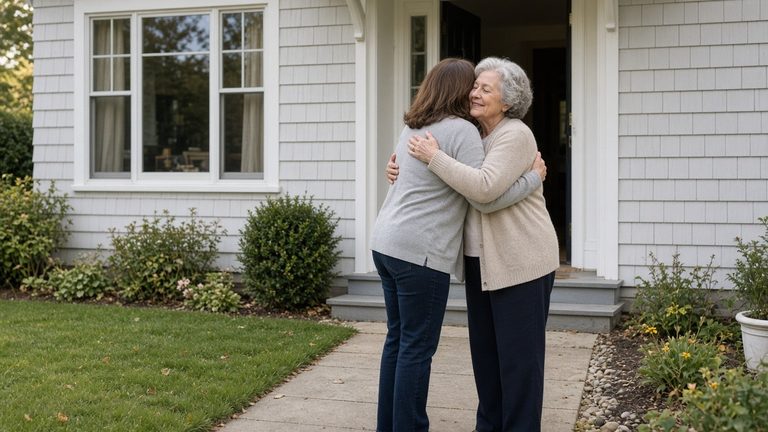
The promise you still hear in your head
A lot of us said it out loud years ago: she will stay in that house. The promise was made when Mom was steady on her feet and the LIRR still felt like a backup plan, not a lifeline. Keeping the promise now can mean ignoring a stove left on, or a neighbor who has already called twice.
Guilt usually sits on top of love, not instead of it. You are not choosing between caring and not caring. You are choosing between two hard roads, and both of them come from wanting her safe.
What often shows up first in Nassau homes
- Medications no longer match the bottles, or a week's pills are still in Tuesday.
- A new scuff on the car, or a story about 'almost' hitting the curb in the shop-rite lot.
- The refrigerator with one carton of milk and a lot of takeout containers.
- Unopened mail on the table near the door, including bills.
- She has stopped going to church, cards, or the same diner, and the reason keeps changing.
Why the guilt is so heavy here
Nassau is close to the city, so people assume you can 'just stop by.' A daughter in Forest Hills or Astoria may be only a few stations away and still feel she has failed because she cannot be in two kitchens at once. Siblings who stayed in Hicksville or Massapequa can feel judged for seeing the decline sooner. The geography makes the guilt sharper, not smaller.
A steadier way to decide
Start with what you are seeing, not with a verdict. Write down three recent incidents and share them with a sibling or a trusted doctor. Touring a community is information, not a betrayal. You can look without signing, and you can include Mom in the looking when she is ready.
If the house is the thing she loves, say so. The question is whether the house still loves her back: stairs, ice, a bathroom on the second floor, a yard no one can keep.
Being kind to yourself is part of the plan
Sleep, a meal that is not in the car, and one person you can tell the truth to are not luxuries. A worn-out caregiver makes poorer decisions. The Nassau County Department of Human Services, Office for the Aging, (516) 227-8900, can point families toward local supports. You can also talk with one of our advisors, at no cost to your family.
Sources and where to check
- Nassau County Department of Human Services, Office for the Aging, 60 Charles Lindbergh Boulevard, Suite 260, Uniondale, NY 11553, (516) 227-8900.
- Alzheimer's Association, Long Island Chapter, and its 24/7 Helpline, 1-800-272-3900. alz.org/longisland
- The U.S. Administration for Community Living describes caregiver support programs in general terms. Local details vary; start with the Nassau County Department of Human Services, Office for the Aging, (516) 227-8900.
Links checked 2026-11-26.
General information only, not medical, legal, or financial advice. Rules change; check with the agency or a licensed professional.